Turning an Accident into a Dream VFX Career: A Conversation with Gearbox Software’s Ashley Lyons
Aug 21, 2026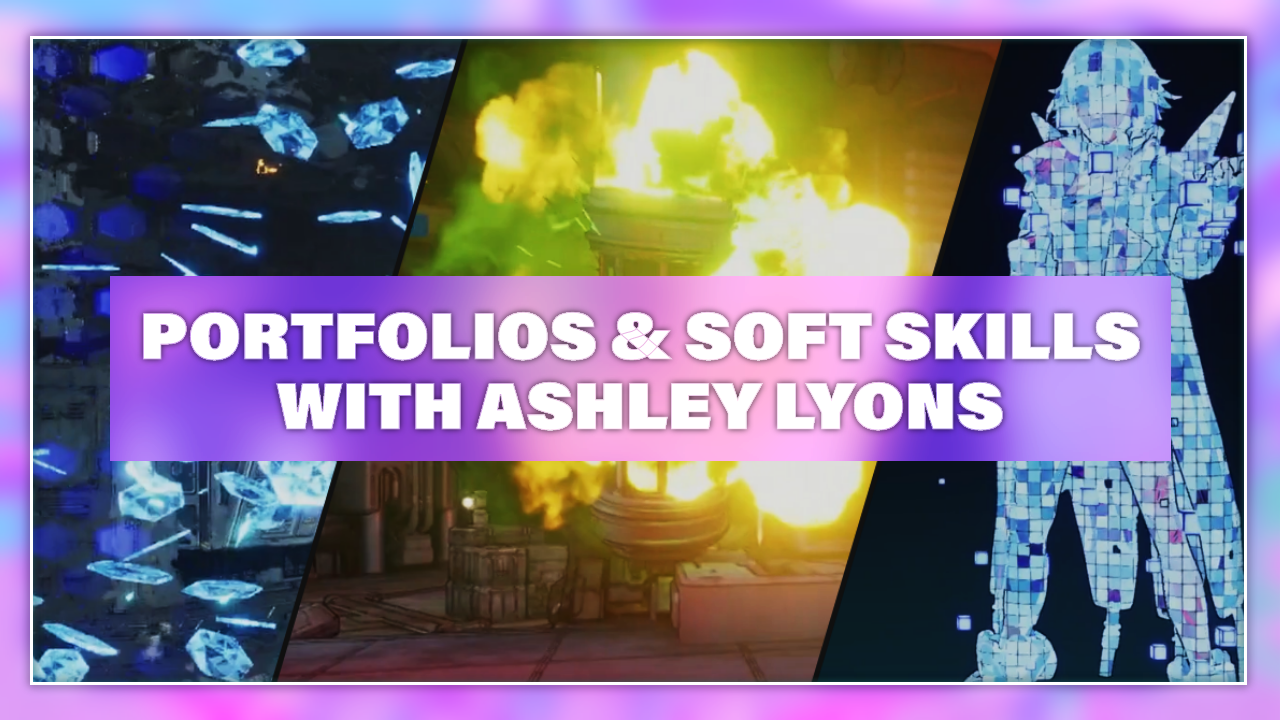
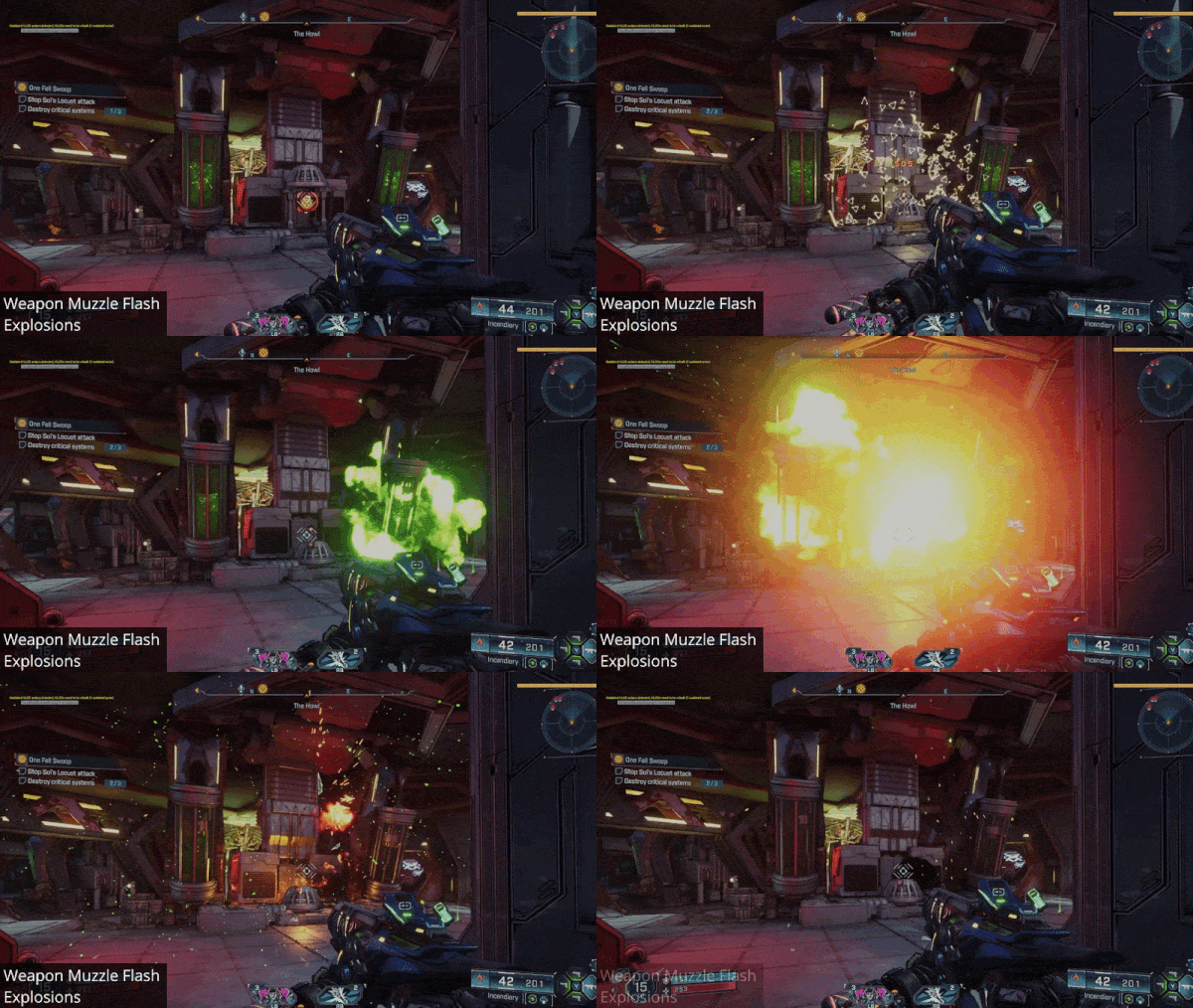
Breaking into the video game industry can feel like solving a puzzle with missing pieces. The job market is daunting, the software changes constantly, and the competition is fierce. How do you go from a student with zero experience to an artistic lead on major AAA titles like Borderlands 3 and Tiny Tina’s Wonderlands?
We sat down with Ashley Lyons, a VFX Lead at Gearbox Software and instructor for our upcoming Advanced Shader class, to discuss his unique journey, the realities of the job hunt, interview strategies, and why your soft skills matter just as much as your portfolio.
The Accidental VFX Artist
Many people spend years plotting their path into game development, but for Ashley, it started with a literal misclick.
Ashley Lyons: "Looking back at my overall career, getting into effects was an accident. I went to school undergrad as a sculpture major. I wanted to be a legitimate gallery artist, building physical sculptures. I took a class on 3D modeling because it was sculpture-adjacent. I liked it, but didn't think much of it after graduation.
Being a gallery artist wasn't panning out, so I looked into grad school for graphic design. When I applied, I accidentally checked the box for visual effects because I was young and my career goals were aimless. I just knew I needed to do something with my life. The school called me and said, 'Hey, we see you're signed up for visual effects. We want to make sure you have everything you need.' I just said, 'Visual effects? Yeah, sure. Let's do that.'"
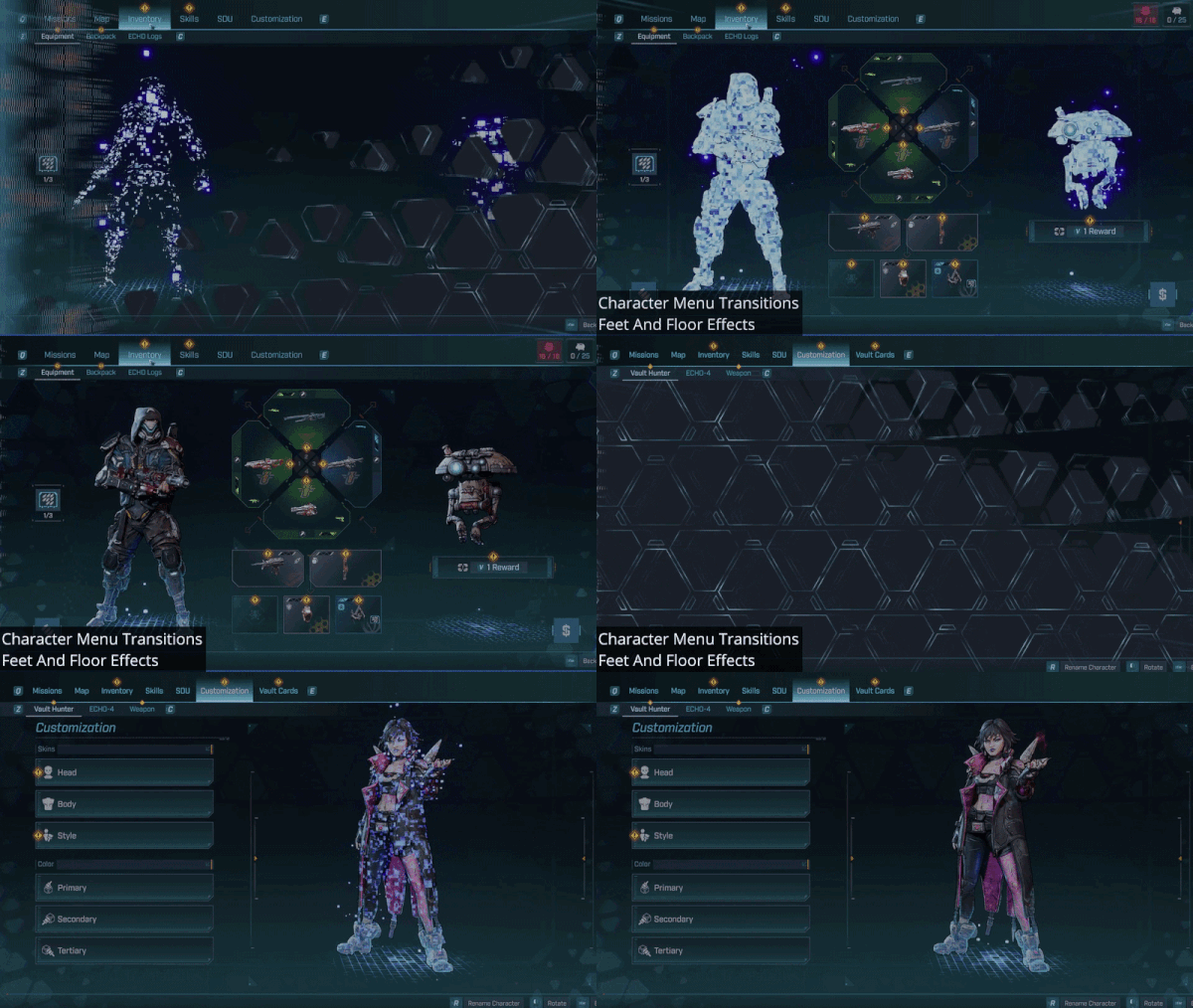
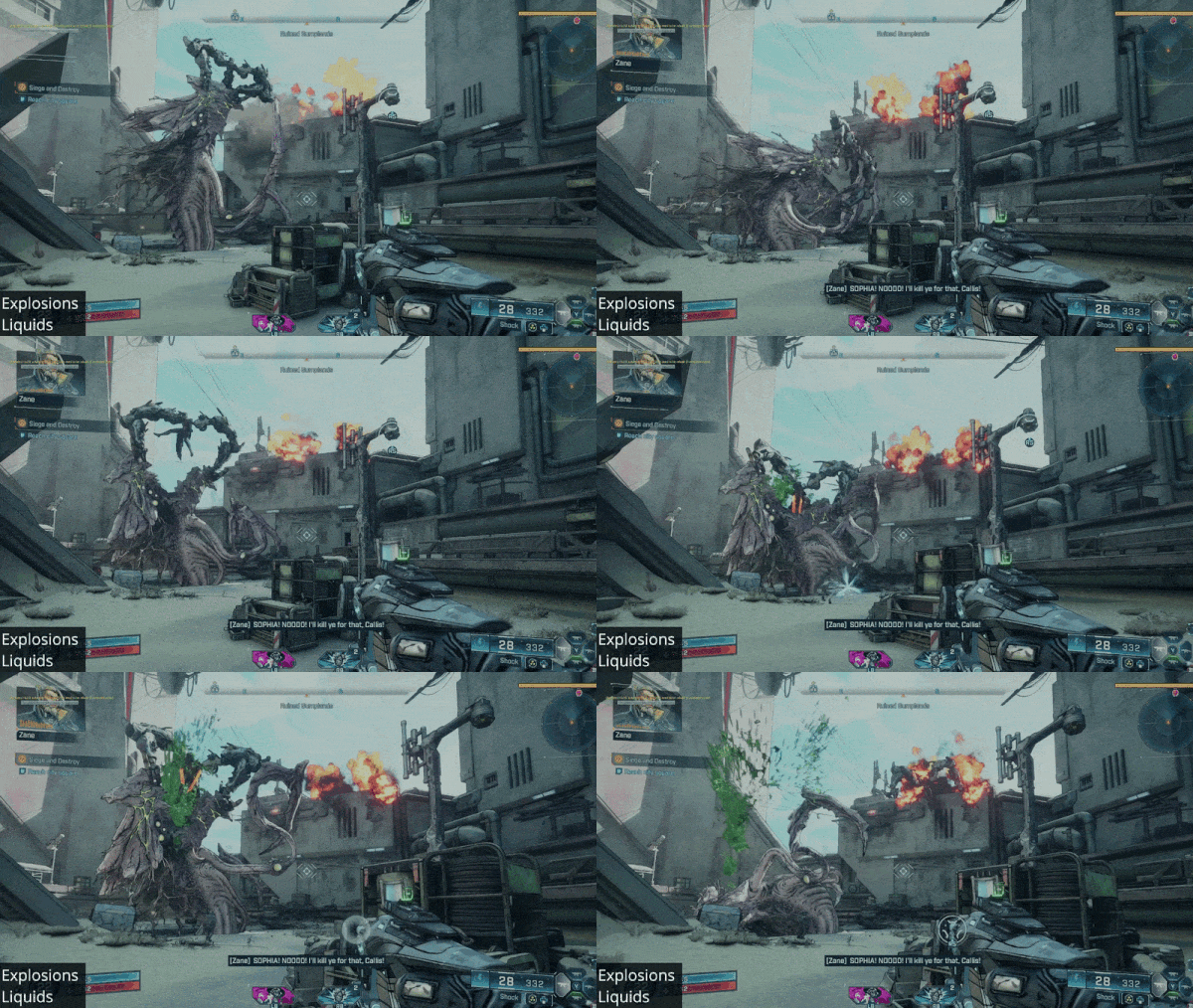
What started as a mistake turned into a natural calling. Ashley quickly found himself gravitating toward liquid simulations, explosions, and pyro sims in Maya.
Moving from Film to Real-Time Games
Ashley’s career began in film and commercials, creating realistic renderings for brochures and animated advertisements. However, the slow feedback loops of pre-rendered FX eventually drove him to try something new.
Ashley: "After a couple of years of doing advertisements, I saw a posting for game development and decided to try it out. I jumped into game dev doing visual effects for video games and instantly found it amazing. With games, the real-time feedback is right in your face. You update something, and you see it live.

With pre-rendered stuff, you update a simulation, wait 20 minutes for it to finish, realize it doesn't work, and have to redo it. With real-time software, you build something cool and see it immediately. It gradually evolved into a passion, and I became a real-time effects artist."
The Reality of the Job Hunt: Stacking the Odds
Eventually, Ashley’s simulation background caught the eye of Gearbox Software. At the time, the studio needed someone specific to create fluid simulations and flipbooks for Battleborn.
But before landing that dream role, Ashley faced the exact same disheartening rejection that many junior artists experience today.
Ashley: "Before working at Gearbox, I considered myself a junior. I had only been in game development for about two years. Looking for my next role was a disheartening experience because I received so many rejection emails saying, 'No, you're not what we're looking for.' Then all of a sudden, Gearbox - this Triple-A studio - came to me and said, 'Hey, you are exactly what we're looking for. Come over, we want to hire you.
You just have to keep working at your skills, keep learning, and keep updating your resume and portfolio. You never know when you will find that one studio that is your perfect fit."
Success in this industry is about timing the right opportunity with the right skill set. It is about adding droplets of water to a bucket until it finally spills over into something big. While you cannot control the market, you can control your input.
Overcoming the Software Gap
When Ashley applied to Triple-A studios, he hit a massive roadblock: he didn't know Unreal Engine.
Ashley: "The studio I worked at before Gearbox used completely proprietary software. My skill set didn't translate to Unreal or Unity, which is what every studio was asking for.
For months, I was hitting up YouTube, buying tutorials, and telling myself, 'I need to learn this software.' I was busting my butt trying to learn it all. Eventually, I was able to produce effects for my portfolio inside Unreal, and that added that extra level to my applications."
There is no magic solution to breaking into VFX. Putting in the hours to master the software is the great equalizer.
What Managers Look for in Interviews: Soft Skills vs. Rock Stars
A stellar portfolio gets you through the door, but it only takes you so far. When managers interview candidates, they are looking for much more than technical talent.
Ashley: "Skills will take you to a certain level, but it's that age-old saying: if no one wants to work with you, then skills don't really matter. I would rather work with someone I have a good working relationship and flow with, rather than a 'rock star' talent who creates conflict every day.
Those soft skills matter because reputations precede you. This is a massive industry, but it is also incredibly small. Everyone ends up knowing everyone eventually. Your reputation for being either awesome to work with or a problem to work with will get around. VFX leads across multiple studios constantly text and email each other saying, 'Hey, I'm interviewing so-and-so. I see you worked together - what do you think of them?' Collaborative individuals who love the give-and-take of feedback last a long time and do really well. If I enjoy working with someone, it just makes going to work better. Whether remote or in an office spending 8+ hours a day together, you want to enjoy being around them."
The Art of the First Impression
For candidates stepping into their very first industry interview, making a strong debut can feel terrifying - especially for creative individuals who may be neurodivergent or struggle with social anxiety. Ashley’s advice is simple: lean into who you are.
Ashley: "Just be yourself. Don't try to come across like you're trying too hard, because ingenuine personalities stand out immediately. If they're not genuine in the interview, they won't be genuine if we hire them. I would rather have someone be awkward as themselves, because at least I know that is their genuine personality. I understand awkwardness - we're game developers for a reason! We spend ten hours a day in front of a computer. Awkwardness is a thing.
In the past, I've had to read books about how to act in front of people and how to be personable for events like GDC, where I knew I'd be presenting in front of hundreds of people. I needed to not come across as awkward and show confidence. It's a craft. You can learn it, improve on it, and even crack a joke about it in the interview. If you say, 'Yeah, I just read a book on how to maintain eye contact because I'm no good at talking openly,' that is so refreshing. I would rather have someone be their awkward self than an ingenuine personality that changes after they are hired."
Authenticity builds trust. When a candidate breaks the ice, it gives managers immense confidence that they will thrive in a studio environment. Making a video game, show, or movie is highly collaborative. Proactively putting others at ease is valuable because you will constantly need mentorship, compromise, and collaboration from your team. Easing into those interactions comfortably makes people excited to work with you.
The Power of Collaboration Over Competition
Game development requires professionals who leave their ego at the door. A healthy team dynamic relies entirely on transparency and mutual growth.
Ashley: "You want to work with someone who is collaborative, not combative with their work. You don't want someone who looks at you like, 'Oh, you did something better than me, therefore I'm not going to share my knowledge with you.' I've luckily only ever met one person like that in my career, and they were not a pleasure to work with.
If someone makes something awesome, my first expectation is for them to say, 'Here, let me show you.' I've done that as a lead, a senior, and a junior. If I make something cool and a teammate asks how I did it, my instinct is to show them. Giving that skill to someone else makes them a better artist, which makes the whole team better. A rising tide lifts all boats. Friendly competition is great - looking at a teammate's work and saying, 'Wow, you just made something awesome, now I want to make something awesome' is inspiring. But combative competition will completely ruin a team."
These indicators often surface during interviews. This is why gaining team-based experience as a student is so valuable. Joining a community where you learn under a mentor, receive feedback, and collaborate with peers allows you to build those muscles before stepping into a live production.
Final Advice: "Looking for a Job is a Job"
Persistence is the ultimate deciding factor when trying to break into game development. Ashley emphasizes that consistency eventually overrides the sting of rejection.
Ashley: "My advice to students working their tails off who haven't landed that first job yet is to just keep applying. It is disheartening to receive rejection email after rejection email, and I totally understand it. Even though I've been at Gearbox for 12 years now, I still remember applying for jobs back when I was a junior. My advice to that student would be the same advice I would give to my younger self: just keep applying.
Keep working on your portfolio, keep updating your skills, keep updating your resume, and do what you can to stay motivated. My parents used to tell me that looking for a job is a job. It's a job in itself. You have to put in eight hours a day looking for a job, or updating your resume, or updating those skill sets. Keep working through those tutorials and keep updating what you can. A lot of the time it comes down to the luck of the draw where the studio just sees that you have the skill that they are looking for. It may take some time. It may take years, it may take months, but you will find a job eventually."
While the game industry is vast, it is also incredibly small and tightly interconnected. You can build your network and catch the right opportunities by taking proactive steps:
- Attend industry events like the Game Developers Conference (GDC) and other panels
- Participate in local game dev meetups
- Connect with industry professionals on LinkedIn by sending a polite message (e.g., "Hey, I saw your work. Your work is awesome, just wanted to say hi!")
At the end of the day, being nice to people is key, and just keeping those contacts, essentially.
Take the Next Step To Become a VFX Artist
If you are ready to refine your technical skill sets, master real-time workflows, and build a portfolio that catches the attention of Triple-A studios, come learn directly from industry veterans. Explore our upcoming courses and join a community designed to support you through every stage of your career. We will see you on the inside!
Start Your VFX Apprenticeship
Begin your journey towards mastering FX for games and animation. Join VFX-A All Access and discover cutting-edge 2D, 3D, and real-time FX training.