Real-time material design for VFX artists: Advanced Shader Class with Oli McDonald (prev. Riot Games)
Jul 20, 2026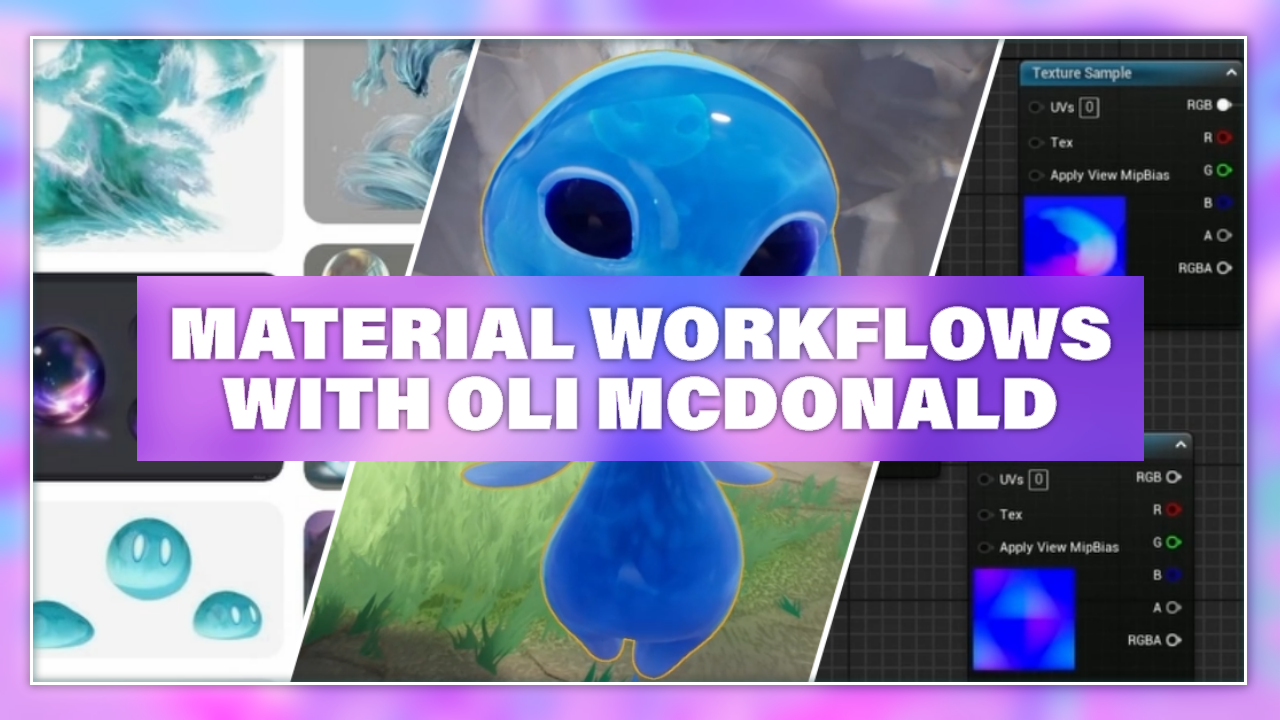
Building complex, production-ready shaders can feel incredibly daunting if you consider yourself more of an artist than a mathematician. However, mastering the technical side of real-time material design is the single fastest way to unlock total creative freedom and make your portfolio stand out to top-tier gaming studios.
To break down how anyone can bridge the gap between art and technical execution, Jason Keyser sits down with a Senior VFX Artist Oli McDonald (previously Riot Games). Together, they discuss Oli’s 15-year career across AAA consoles, PC, mobile, and VR pipelines, how he handles shader logic using visual layers rather than complex math formulas, and what studio managers actually look for when reviewing artist portfolios. This conversation pulls back the curtain on what it takes to build a career in real-time visual effects.
Jason: So I met Oli when we worked together at Riot Games, and I thought it'd be cool if we just had him here because he's going to be teaching the upcoming Advanced Shader Class taught in Unreal Engine. It'd be cool if you got to know him.
So we're just going to chat for a little bit. And Oli, tell us a little bit about yourself, and a little bit of your background. Take it away!
Oli: Yeah, sure. I've been in the games industry for about 15 years. So I've worked on a wide variety of projects: consoles, PC, handheld, and VR. I’ve kind of touched all of the platforms.
I initially got into the industry with a background in animation. So when I was kind of finishing school, the thing I really loved was Pixar films. I love Final Fantasy cutscenes and, of course, love games. So I kind of wanted to make Final Fantasy cutscenes or Pixar shorts.
And so I studied animation at university. For my final thesis, I aimed for the Pixar style. I don't think I quite hit it as a one-man development, but it was really great to get experience in modeling, rigging, skinning, animating, rendering, and compositing.
Now, when I finished university, I looked around for jobs in animation, but there weren't really a lot of them going. And animation wasn't necessarily the thing that I loved the most. You know, if you go to a job in animation, you just animate all day, every day. And I really like doing a bit of everything.
There was a job going in a nearby studio for visual effects, and at this time, VFX Apprentice or anything like VFX Apprentice didn't even exist. So the main way people got into effects was either from the tech art side or from the animation side. I kind of got excited about the fact that you get to do a bit of everything in VFX.
Everyone kind of sits on the spectrum of technical to artistic. Wherever your skills lie, you can find a really good place to utilize your skills in VFX because you have to touch a bit of everything. And since I got that job, I never really looked back. I love doing what I do now and super excited to share some of my knowledge with everyone!
About the Unreal Engine Advanced Shader Course
Length: 4 Weeks
Next Start Date: August 10th, 10AM CDT
Pricing: $800 (Pricing options available)
Format: Hybrid (Pre-recorded lessons + twice weekly 1-hour live Discord lectures)
Commitment: 12+ hours per week recommended
Jason: I was always so impressed with your work. I remember playing RIGS: Mechanized Combat League in VR right around the time it came out. It was so much fun. I was at a convention, and they had it loaded up, and I love mecha games, so I was like, "This looks like a blast"!
Oli: Yeah, that's awesome!
Jason: And you came to Riot right after that. Your work at Riot Games just speaks volumes for itself, and it's really some incredible work that you did there on League of Legends.
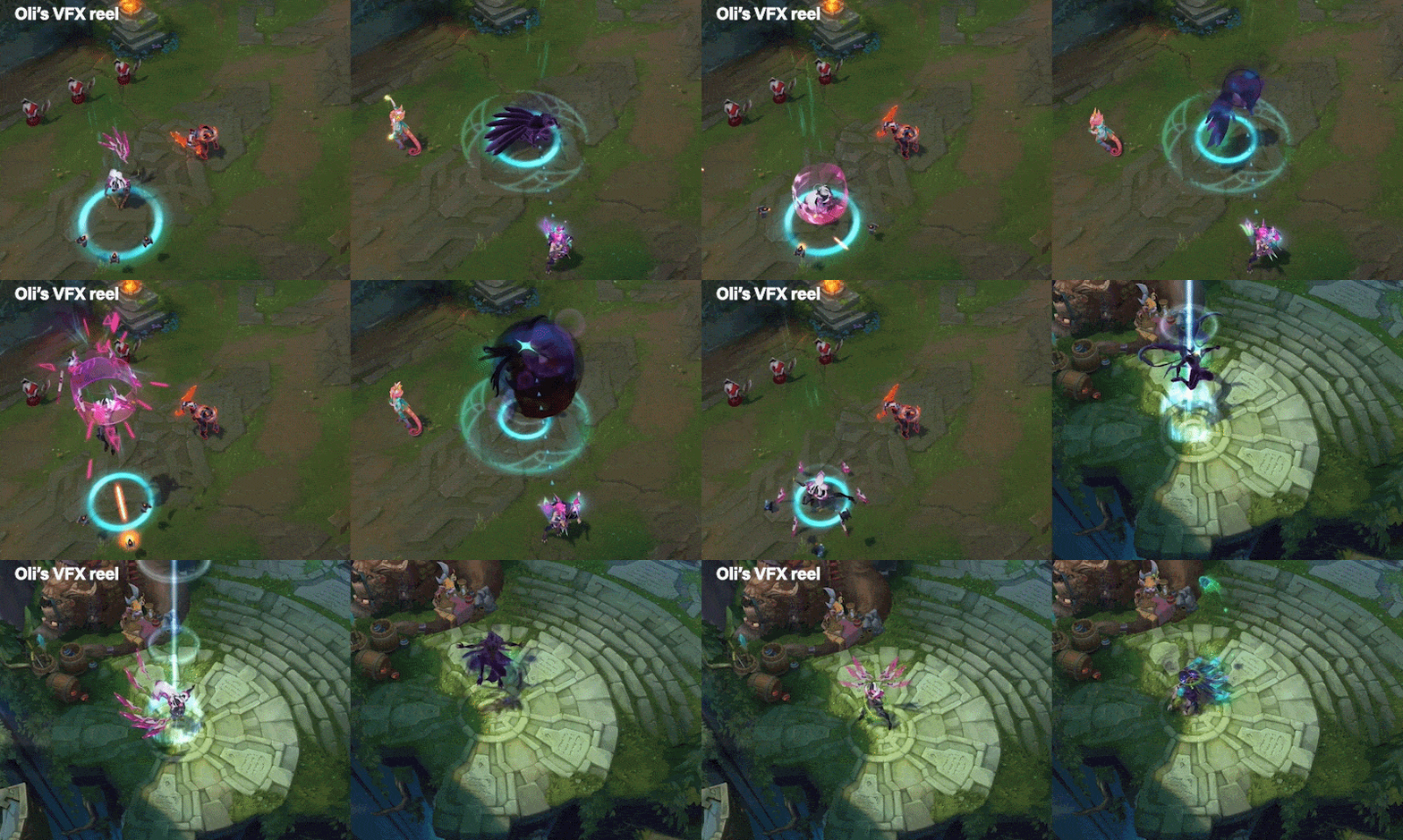
Oli: I really loved my time there. I was on skins the whole time, which was really awesome for me. I'm super excited about League and the League universe, so reimagining skins across different themes and universes was especially exciting. And yeah, I think I got some really valuable experience there too.
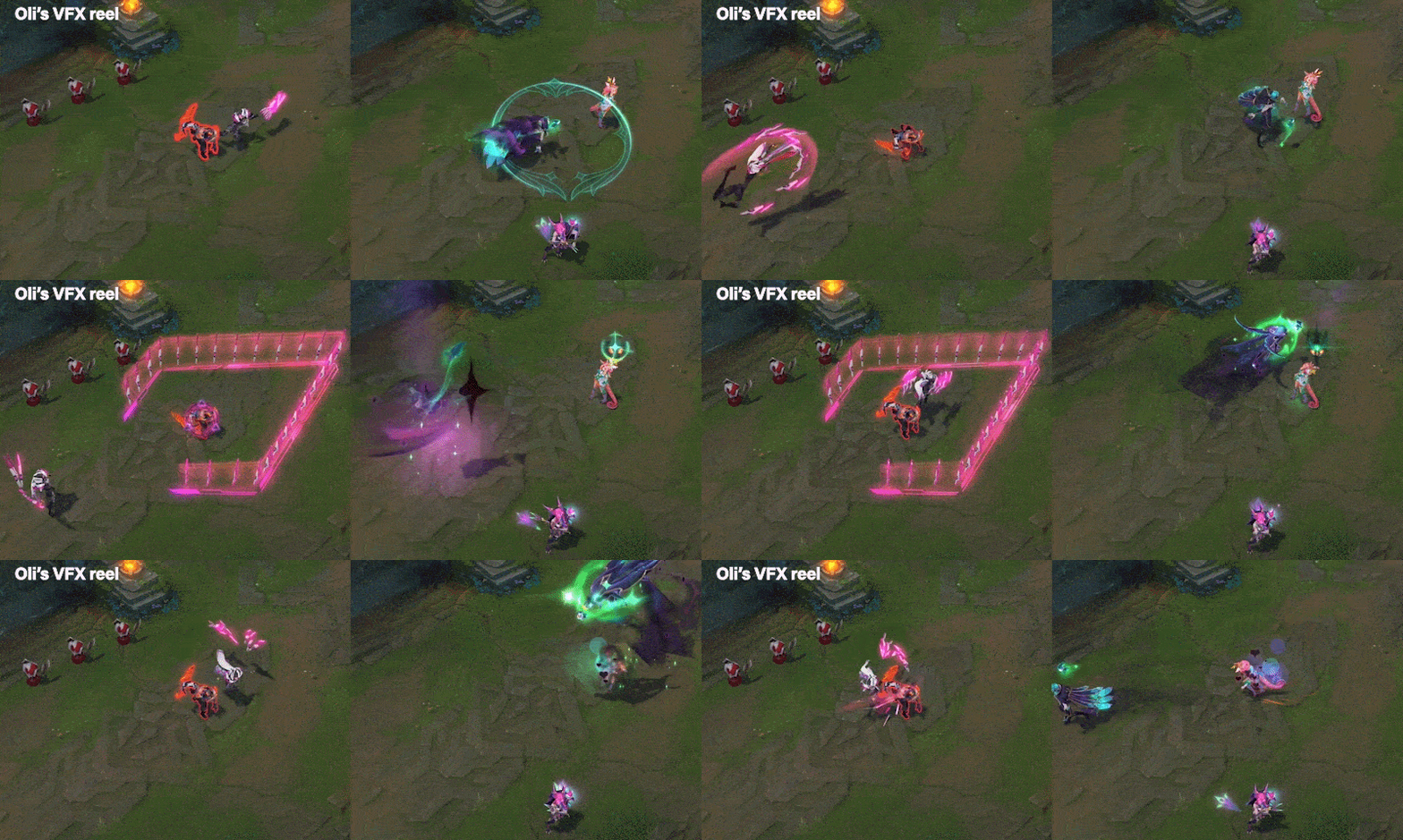
You know, being both an artist and then leaning into being a manager, getting a lot of experience in sort of art direction and giving feedback to outsource artists, and sort of managing the visual direction of a discipline was a super interesting part of that job too.
Jason: I'm honored and excited to have you join us as one of our instructors. This materials class is going to be great. I wanted to talk a little bit about materials and shaders, you know a thing or two about those.
How to bridge the gap between art and technical execution
I know you were involved in a lot of the shader work we were doing on League at the time, and in some other things too. So talk to us about that specifically. Like if you could share with somebody who was maybe a little hesitant about advanced shaders - "I don't know if I'm ready, I don't know what to do" - like they're feeling a little overwhelmed. What would you say to people who are thinking of learning more about materials and shaders, but might feel a little scared?
Oli: I think for me, the most exciting part about learning shaders is that you can do whatever you want. It's a very, very powerful toolset, and it can seem quite daunting to learn. I know.
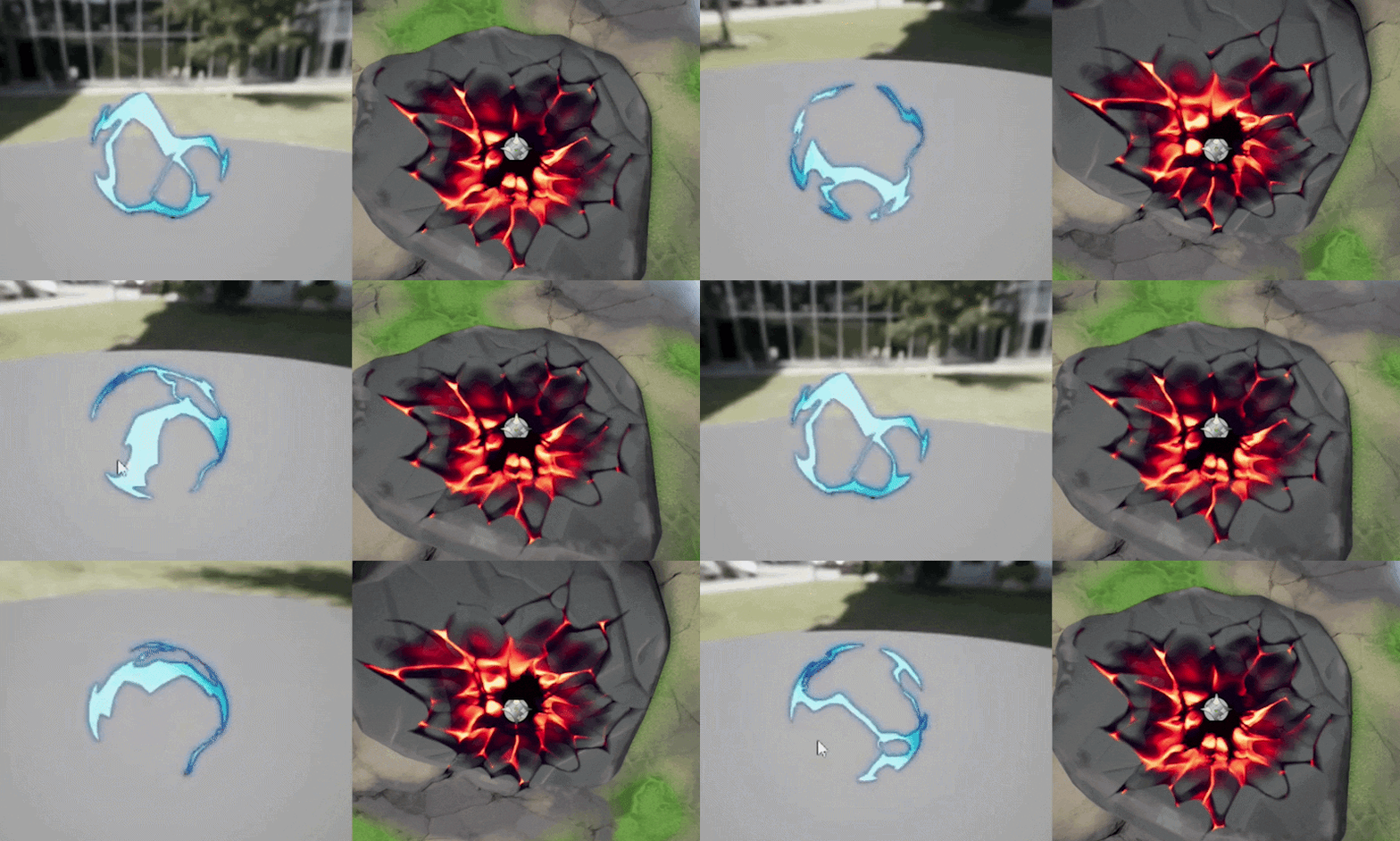
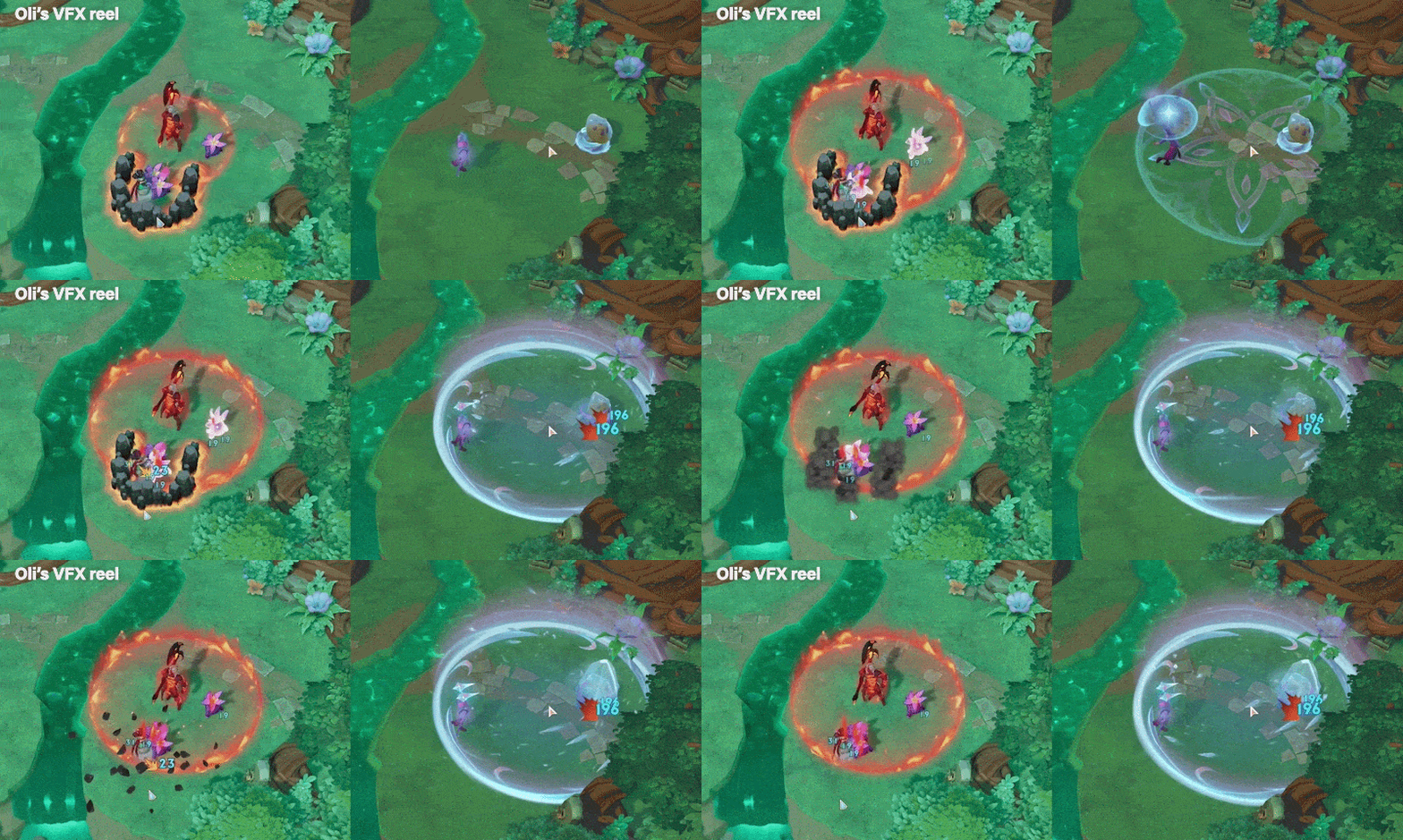
Certainly, it's interesting because when I was working at Riot, we were building out the material initiative. I came in with extensive material experience from previous Unreal projects, but the League toolset was quite structured. The material was part of the emitter, and you had to make it how it was, and that worked really well for 99% of the things you want to do.
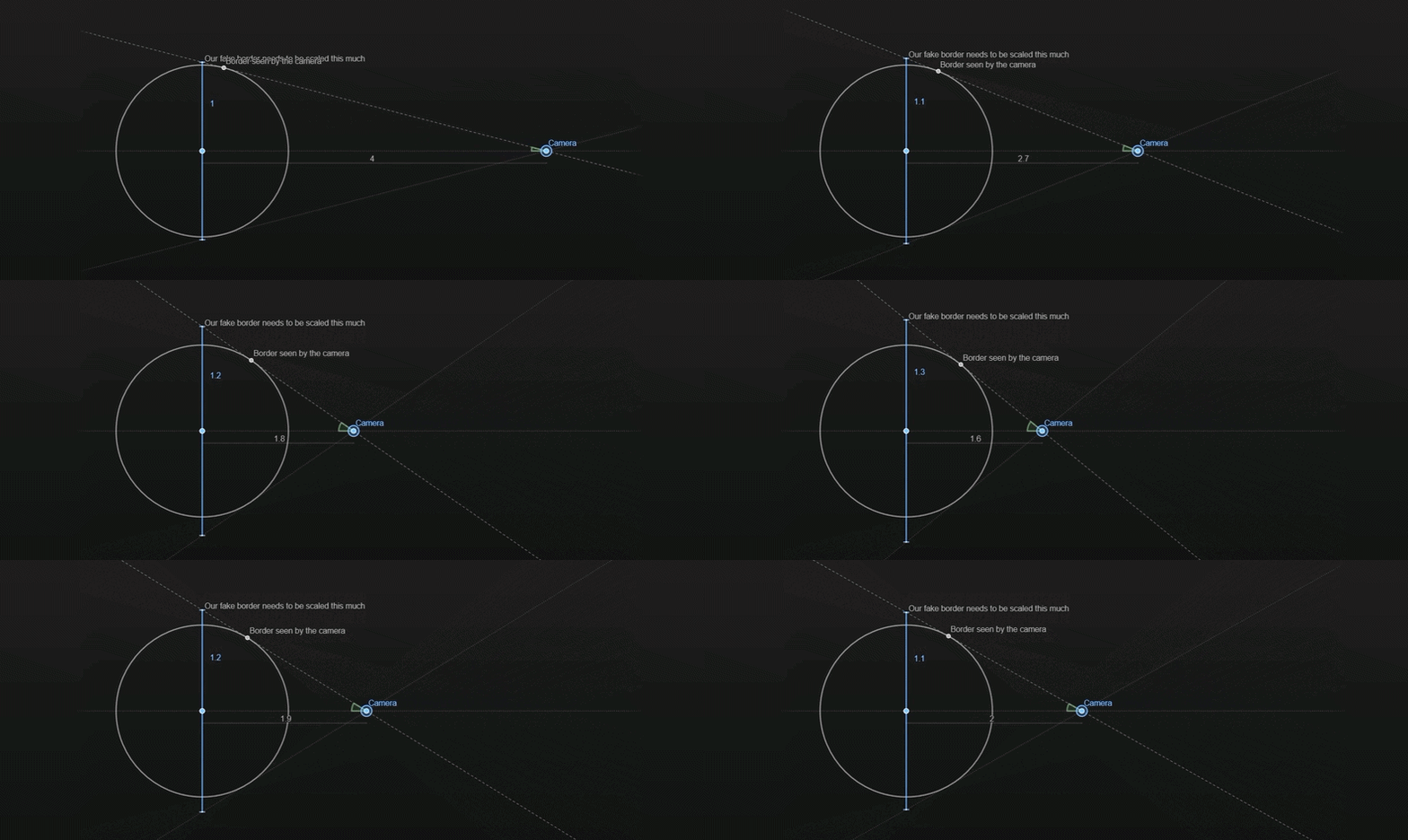
But there are certain really cool effects that you want to make with materials, like things based on the camera angle, cool metallic stuff that you just can't make in a very structured set.
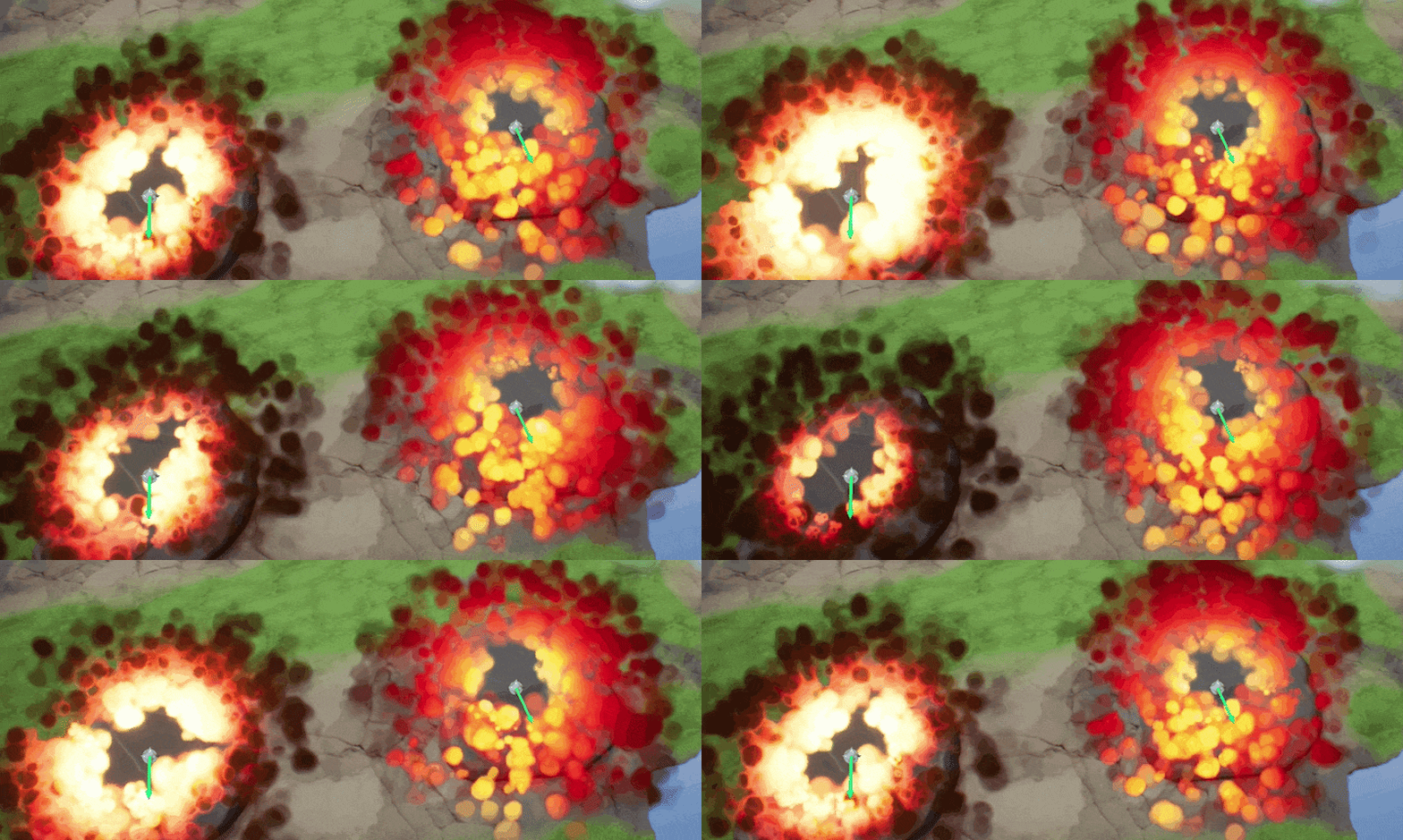
So gaining the ability to make those really exciting effects is the appeal of materials. Now, as I say, it can seem intimidating. It can also seem like a lot of maths if you are more on that artistic side of the spectrum.
Building complex shaders one layer at a time
What I think is super important to keep in mind is that you don't go in and do it all at once to solve a mathematical formula that looks really complicated. You solve each little bit, and you stick them all together.
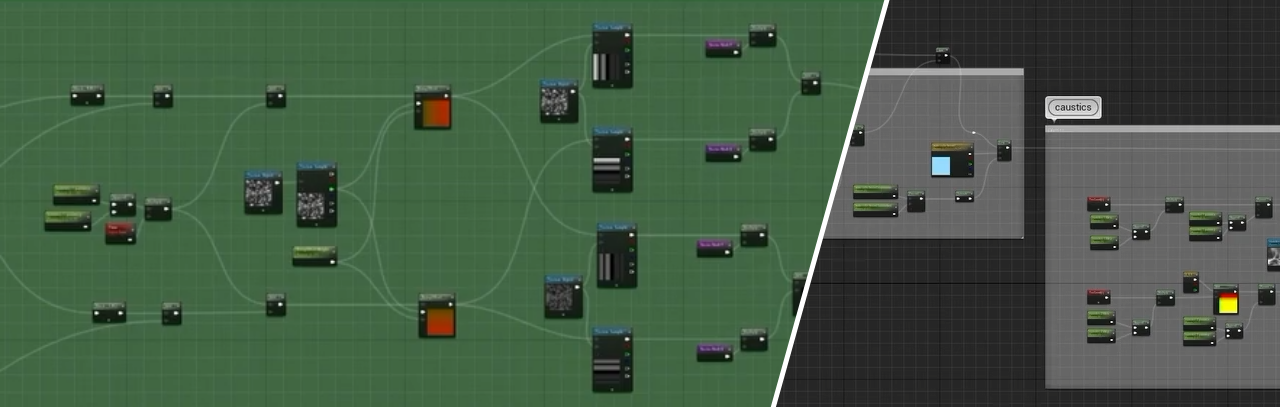
And that's the same with materials: we learn the foundational building blocks, and you're then layering them up on top of each other. You might draw a really complex painting in Photoshop by building up the layers. That's the thing that you can do with materials.
Then the other part is just that my job is to help you learn from analogies and things you understand. And so, hopefully I've done that well. But yeah, like that's the exciting opportunity of this course, I think.
Unreal Engine Advanced Shader Class - Full Curriculum Breakdown

Week 1: Intro & Color Foundation. Explore color setups and create dynamic gradients using our animated Aquanna character model.
Week 2: Advanced Shader Techniques. Harness complex tools like Caustics, Bi-planar Projections, Flow-maps, and Parallax Occlusion.
Week 3: Blueprint Interaction & Cleanup. Add subtle Vertex Offsets, a Dynamic Reflection System, Normal Maps, and Decals.
Week 4: Production Tips & Tricks. Master production-standard workflows with Translucent Materials, Refractions, and Blend Modes.
Jason: Well, that's the nice thing too, in the class, is that a lot of the content that we've got recorded in the lessons is very thorough, of course, but then there's the live sessions where they can chat with you, ask you questions, get their work reviewed, kind of dive into that at the time.
I totally agree, by the way, that mathematics was never something that I was drawn to until I got into materials, because for me, it's almost like a visual math. It's like, “I can see the mathematics playing out visually,” because I'm a very visually artistic person.
I'm more on the artistic end of that spectrum, like you mentioned, but I think materials have kind of coaxed me into a more technical realm, if you will. That's a good point.
VFX artist portfolio tips for AAA studios
I wanted to ask you one last question, Oli. You've been a manager and have worked with and mentored effects artists for a long time. What would be your advice to somebody who's trying to build their portfolio and really kind of make their impact in their career as an effects artist?
Oli: That's a great question. When I was a manager, we used to have weekly candidate reviews where we went through a bunch of portfolios. I think two things are really important to me.
One thing to think about is what skills you're trying to demonstrate in a piece that you're going to put in your portfolio. Definitely focus on having fewer, better pieces than a lot of pieces that aren't quite up to the same quality.
When I'm typically going through stuff, I'm looking:
- Does this candidate have a good understanding of color theory?
- Do they have good shape language?
- Do they have good timing?
Just something to think about when you're structuring a showreel, and when you're really making pieces to go in your showreel.
I would say another thing is to make something you love and are excited about because you're going to put so much more energy, passion, and creativity into it. But yeah, just keep in mind that someone on the other end of this is probably watching 50 reels in an hour, and just try and dazzle them and demonstrate your skills in a nice short showreel.
Jason: Love it. Perfect. Well, again, super excited to have you helping out with this class! And thank you again, Oli, for being here with me today.
Oli: Thanks, Jason. Hopefully, see you all in my class!
Oli will be teaching this class in August of 2026; enrollment is open right now. We're going to run two sections of this class at two different times a day, with the second section in September. You can join the waitlist to sign up for the next cohort.
We've had a lot of interest in our classes, so we're excited to open up more seats to get people in. Go ahead and grab yours today, super excited to see you all in there!
Real-Time Material Design for Artists: Ready to Build Industry-Standard Shaders?
The Advanced Unreal Engine Shader Course features everything you need to break into real-time visual effects:
- Live Feedback: Get direct art direction and critique twice a week on your assignments inside the Discord server.
- Production Assets: Work with a fully animated character model alongside custom project files.
- Bonus Access: Get 2 months to explore our entire catalog of FX courses, focusing on the disciplines you need.
- Community Support: Claim your permanent access to a network of fellow artists and mentors in our private Discord Community.
Note: Seats are highly limited to keep mentorship group sizes small. We do not offer refunds on mentored class purchases.
Start Your VFX Apprenticeship
Begin your journey towards mastering FX for games and animation. Join VFX-A All Access and discover cutting-edge 2D, 3D, and real-time FX training.