How Senior VFX Mentorship Uncovers Your Portfolio Blind Spots
Oct 08, 2026
If you want to take your demo reel seriously and create truly impressive VFX, feedback from industry pros is essential. They see right through your emitters and pinpoint exactly what needs to change for the piece to feel cohesive, for the composition to complement the animation, and for the timing to hit the spot.
This approach has proven most effective year after year, which is why our students join the mentored training in the first place. Because it just works.
But what does the feedback loop actually look like? Today we pull back the curtain and share valuable feedback our mentors have given students, and how it helped them polish their work.
Magic Beam by Harmonie Duquesne
It's easy to spend hours polishing an effect in a vacuum and forget that, in a real game pipeline, VFX must communicate data to the player. Students cover this in Week 2: Professional VFX Analysis & Gameplay Constraints. Self-taught artists often focus purely on "pretty graphics" while ignoring important gameplay logic. Highlighting the effect's edges can greatly improve readability.
When reviewing Harmonie’s WIP, Sjors didn’t just look at the art, he looked at the whole effect like a game designer. He spotted a critical gameplay blind spot: the player wouldn't know exactly where or when the damage hit.
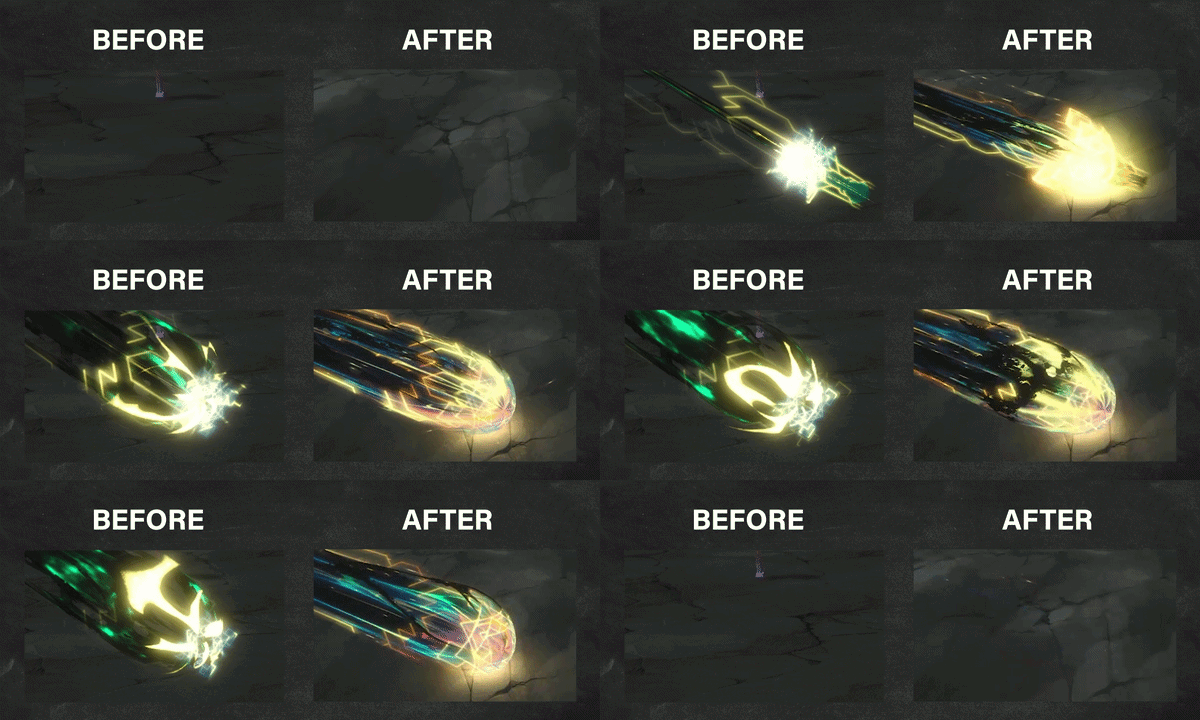
Sjors de Laat (Senior VFX Artist @ Tuatara Games, Portfolio Class mentor): "The beam itself could be a bit "hotter" at the exit point here to signal a build-up of energy at the start of the beam." - Making the start of the beam feel "hotter" will clearly indicate where the damaging area starts and ends.
If you thought your time in physics class is over, we have some bad news: physics is how VFX artists make their work believable. Newton's third law of motion states that for every action, there is an equal and opposite reaction. We know these rules subconsciously, so when real-world physics suddenly doesn't apply, something feels off.
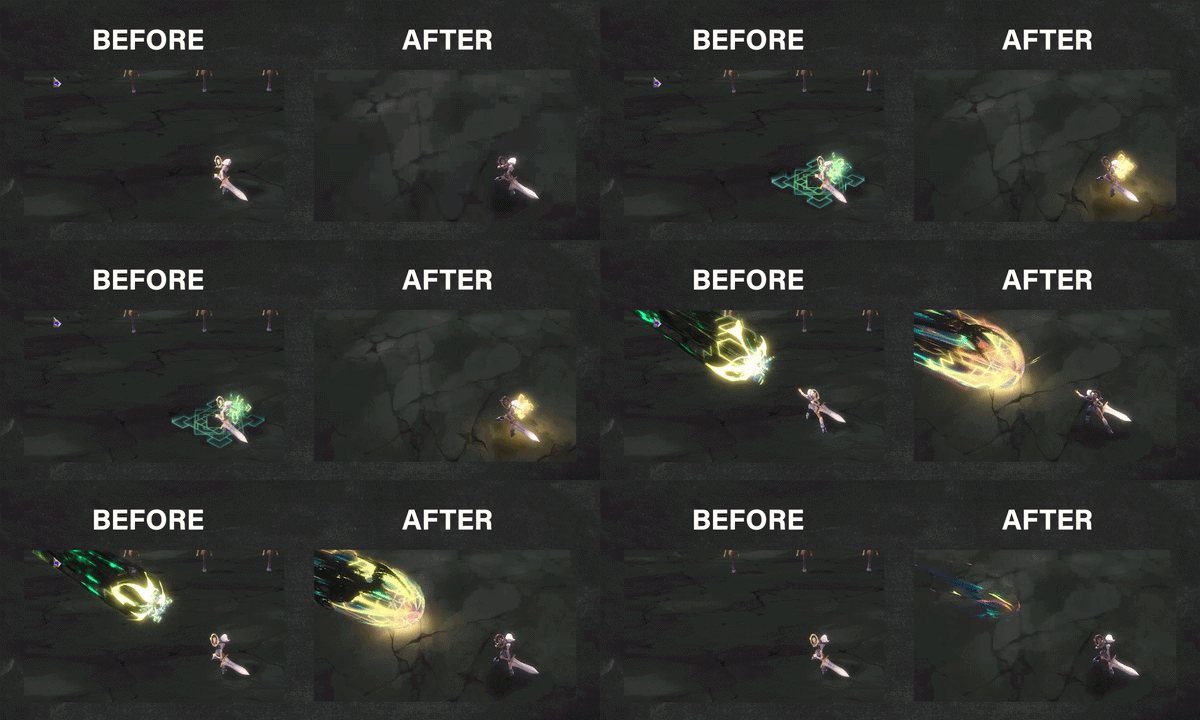
When a torch doesn't light up the environment, it feels wrong. The same goes for giant magical laser beams! If you want to save performance and avoid using an actual point light, you can fake the effect by placing a simple flat card on the ground to imitate the glow.
Sjors: "This moment here could have a more intense flash to make that more impactful. Try to also add some lights to this to make this connect better with the environment."
Fantasy Fire by Kally Mihova
A common trap for intermediate artists is thinking that more movement equals a better effect. Without a mentor to guide your eye, it’s easy to accidentally over-animate secondary elements, making the entire piece feel chaotic and uneven. The motion and unexpected brightness from the little embers draw the eye away from the main flame. Shrinking their spawn range will ensure they appear only after the main effect, acting as supplemental storytellers.
Kally’s fire had great energy, but the subtle flickering and particle spawn ranges were secretly stealing the show from the main flame. Sjors stepped in to apply timing theory taught in Week 4: Applied Timing Theory & Block-In, mapping out a specific intensity graph to fix the rhythm before Kally wasted days polishing the wrong details.
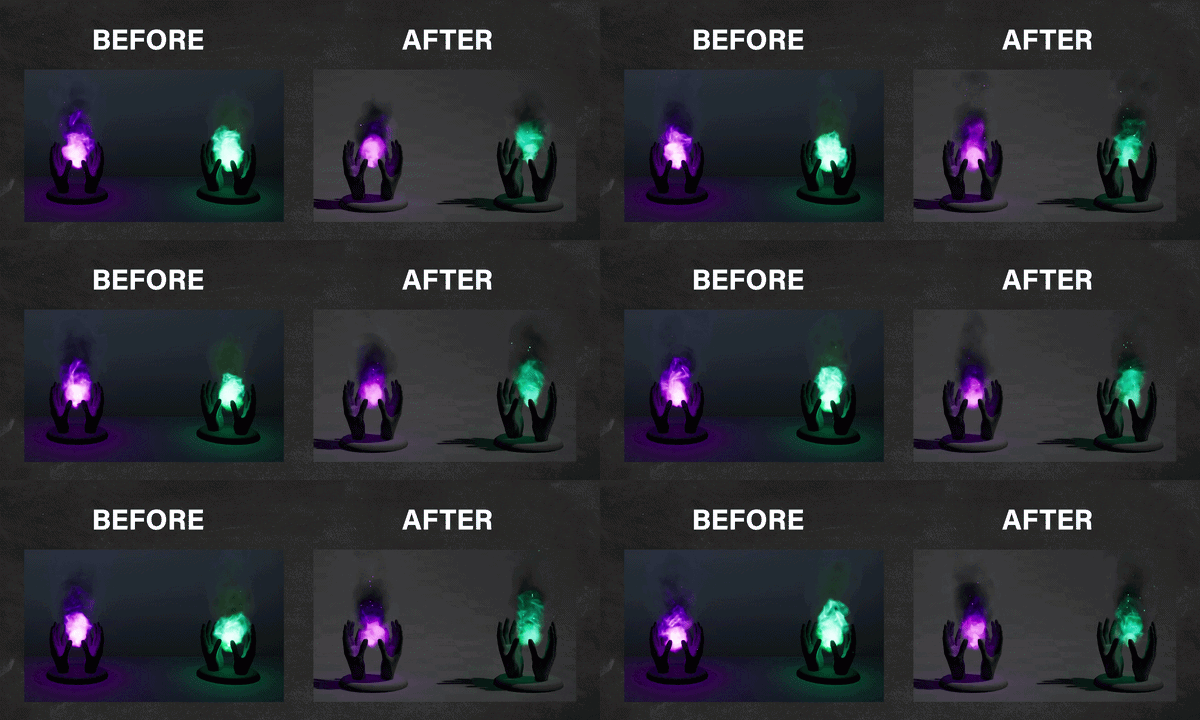
Sjors: "Make the flickering a bit slower, but don't let the strength of the light fade out to 0. I would say cut down the speed of that by about a half or 2/3rds."
Think twice before you are reducing any value to zero. Things in the real world rarely stop completely before springing back to life. A candle might flicker darker, a waterjet might sputter, but they never vanish entirely. Sometimes starting elements that are supposed to grow from half their final size will look better than an "accurate" scaling from 0. A full shift from 0 to 1 is the biggest difference you can make, and you should use it only where it actually matters.
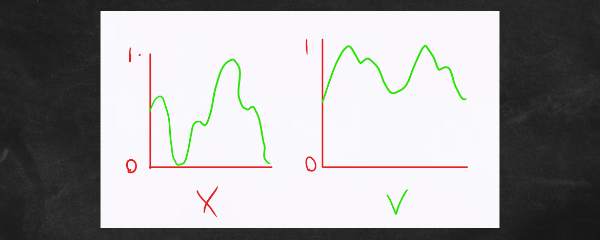
Sjors: "In terms of the intensity, I would describe it with this graph. Do not make it dip down to 0 and always keep some of the intensity there, enough so you can see some variance in the light strength."
Fire Tornado by Jan Šimčík
When you look at your own work for weeks, you become blind to repetition. You might miss that your textures scroll at a uniform speed, or that your meshes completely expose how the "trick" is done to a recruiter.
Jan’s fire tornado was highly impressive, but it needed that final 10% push to transition from a student project to a studio-ready asset. Sjors used his background on titles like Fortnite and Gears of War 5 to target the uniform momentum and add the organic, messy details - like lingering flame licks and soot - that instantly elevate a portfolio piece. This is the topic of Weeks 6 & 7: Developing a Critical Eye & Pushing Effects Over the Top.
Sjors: "This bit of the skirt could use a blend with another noise so it gives more speed variation. I would assume that this part goes relatively fast, equally as fast as the bottom of the tornado."
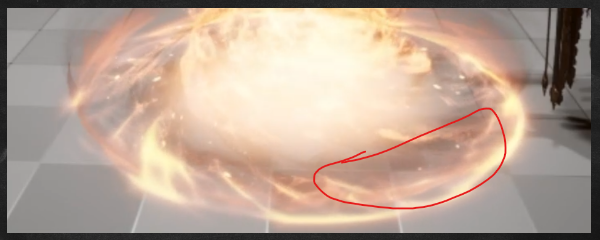
Variation is key to making an effect feel believable. One scrolling noise can feel monotone and boring; adding another layer of noise panning at a different speed breaks repetition and makes the effect believably random.
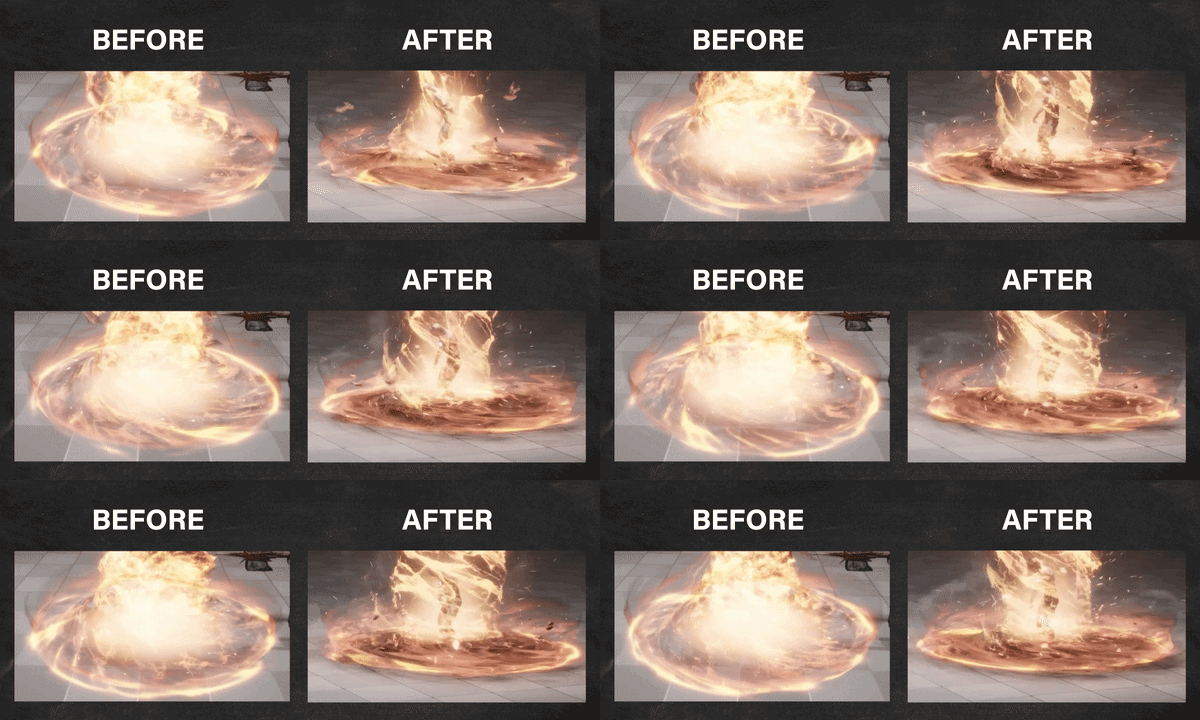
A magician never reveals their secret, and neither do VFX Artists. Avoid using a single driving card or mesh, add secondary elements. In the cast windup, you see a single fiery ring driving all the motion. Adding lingering flames or sparks adds believability and helps hide your trick.
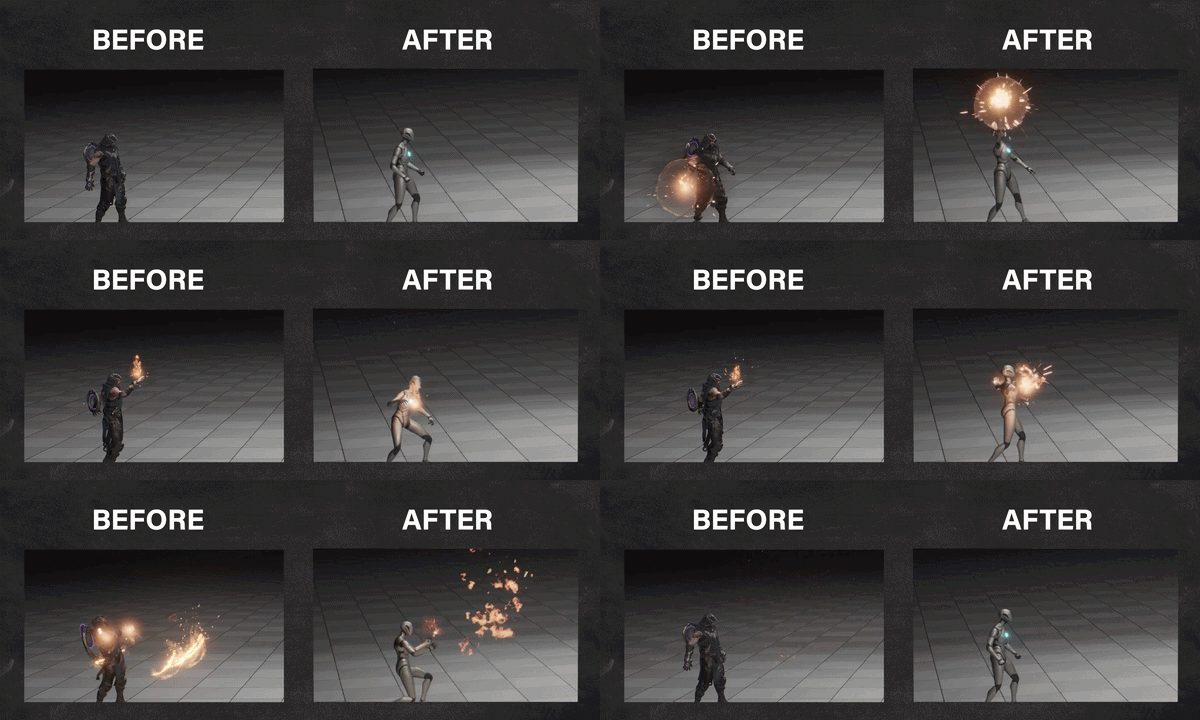
Sjors: "When the fire gets sucked in, it can still feel uniform. Leave some flame licks behind, so it feels more organic."
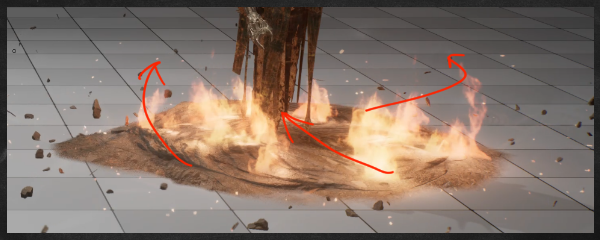
Treat your effect as if it were real. It's reasonable for us to expect cause and effect in the motion of your elements. The flames on the ground point perfectly up, even though a giant tornado just sent the rocks flying. Adding a bit of twisting motion to the remaining elements will make it fit way better into the world it is supposed to interact with.
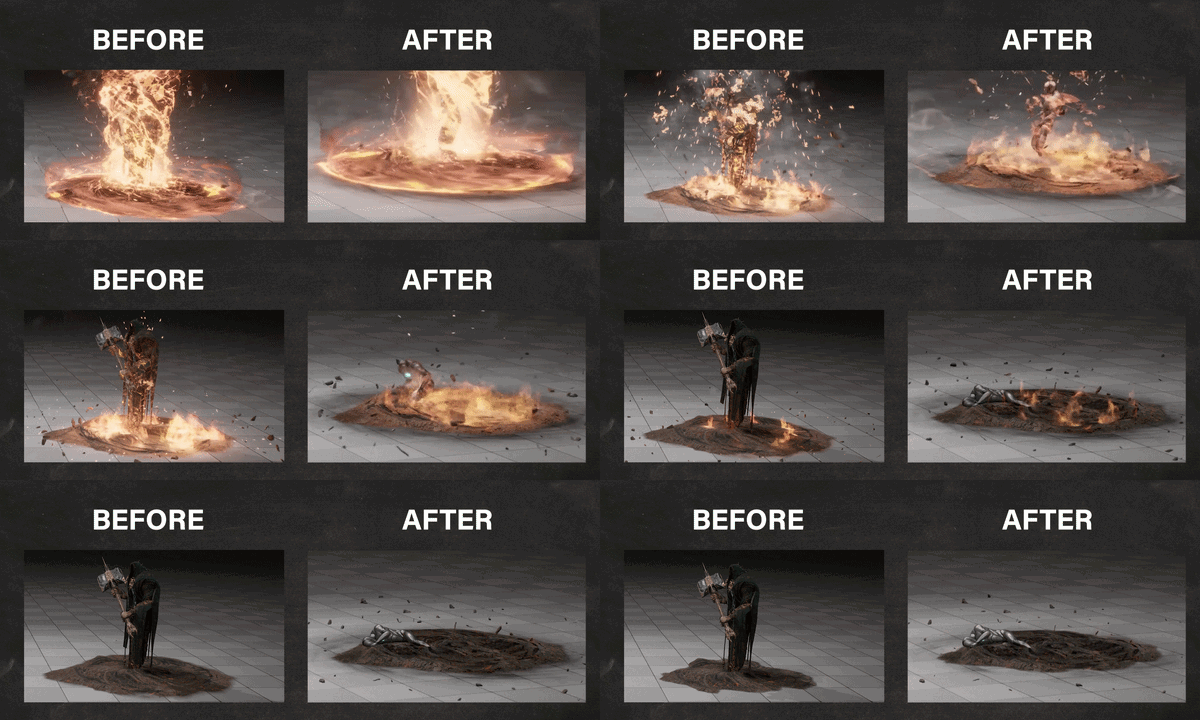
Sjors: "I would let the fire carry more momentum from the decaying tornado by making it feel a bit more twisty. You could incorporate more char and soot into the ground as well."
Everyone's path from apprentice to employed VFX Artist is different, but guessing your way through a demo reel alone is a slow, frustrating loop. Structure and direct guidance from a Senior Artist accelerate your growth, giving you studio insights you simply wouldn't discover studying on your own.
In our Professional VFX Portfolio Bootcamp, you don't just learn theory - you get personalized art direction to polish your work to the exact standard recruiters want today. The next 8-week session starts Sunday, October 18, 2026.
To ensure every student gets uncompromised, direct attention and paint-over breakdowns from Sjors, we strictly cap seats. Once this October class fills, the doors close, and your next opportunity to join the bootcamp won't open until 2027. Don't let your portfolio sit on the back burner for another year.
👉 Reserve Your Seat for the October 18th Bootcamp Today 👈
Start Your VFX Apprenticeship
Begin your journey towards mastering FX for games and animation. Join VFX-A All Access and discover cutting-edge 2D, 3D, and real-time FX training.